Chin-Chin: Why We Should Drink More as a Society

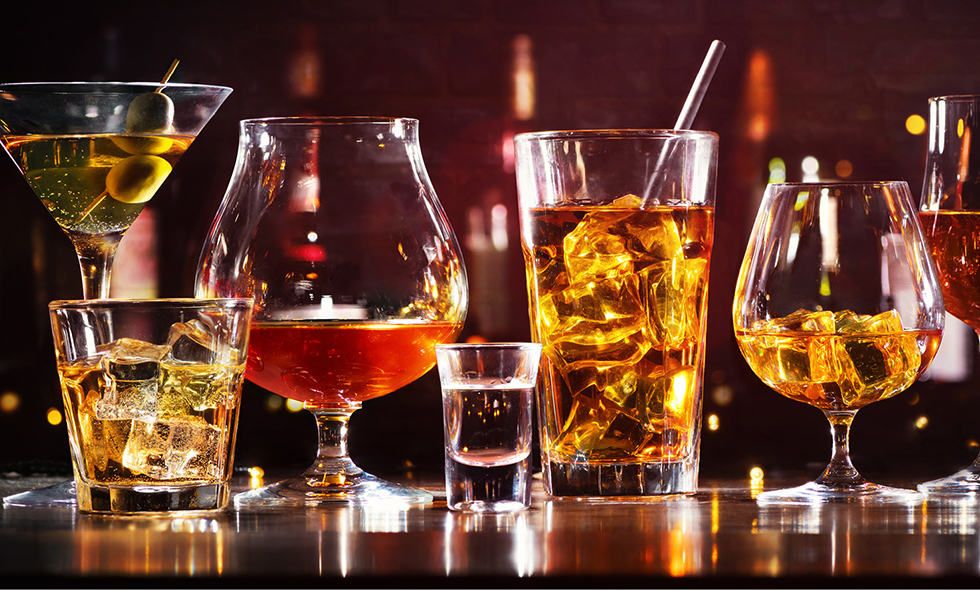
DISCLAIMER: It should go without saying that this is an opinion piece. The views expressed are my own. This should not treated as medical advice. This is also not an endorsement that you should have eight pints at DC. Also for optimal reading, it also should be noted that, following extensive research, this article is best read with ‘Party Rock Anthem’ by LMFAO on loop in the background until completion.
DOVER CASTLE - As a member of society, I am adamant that we underestimate what alcohol actually does in social life. I strongly believe it makes groups of people tolerate each other long enough to become a group in a way that’s extremely difficult without it.
Nothing is a better example than pre-drinks (Pres). For many, it's essentially copy and paste every single weekend in kitchens and living rooms across the country. Even from the first drink poured, nobody agrees on anything. The music is too loud, slightly wrong, and no one can be arsed to fix it. Someone has arrived already way too drunk for how early it is, having come from a ‘pre-pres’ (or even a ‘pre-pre-pres’ if they’re on a sports team or doing medicine). Someone else is trying to organise the group to hop on the central line that has no interest in being organised. No one bothers to mention that Ministry's entry closes in 15 minutes.
Someone says they’re “not drinking tonight” and is, within twenty minutes, definitely the drunkest person there. Someone else insists this is a “light one” while pouring something that clearly doesn’t fall into said category.
Funnily enough, there’s always a brief attempt to gain control of the hordes via a ‘who’s going where, what time, what’s Guy’s Bar saying,’ that never works because everyone’s having a bit too much fun (if such a thing exists).
You’re probably smiling while reading all of this. Two reasons. The first one is my unmatched writing ability. The second is that everyone’s been there, and scenes like this have resulted in so many memorable nights and solid friendships. I’m sure you still say hello to some people you met clubbing during Freshers. I know I do for sure.
Despite all the chaos, there’s a reason why people say pres are the best part of the night. In my eyes, this is the key detail everyone misses: pre-drinks aren’t about the drinking. They make social life start and are the epitome of ‘the night is young and so are we’ energy. The vehicle that pres operates under is alcohol. Alcohol is what allows that to happen without a formal committee-like meeting.
The Pub: The Last Place on Earth You Don’t Need a Reason to Exist
Ok, hear me out. The same principle is just slightly more formalised in your bog-standard British pub.
A pub is one of the last remaining places where you can still exist in public with legitimately no reason. You don’t need a plan, a reservation, or even an outcome. You just arrive and get on the lash. It’s great. Sometimes you stay for one drink. Too often you don’t leave when you said you would. You always seem to bump into people you didn’t expect and the rest of the evening reorganises itself around that very happy accident.
On a more serious note, it is one of the few spaces where social life is still allowed to remain with no pressure. People drift in and out of conversations, fuelled by alcohol or increasingly, (much to my despair) snus. People leave and join with no warning. You can sit alone and still be part of the room, enjoying the light buzz or joining a table because someone offers you a light. Even silence doesn’t feel like failure there in the way it does elsewhere. It feels like meaningful connection.
Everyone remembers some of the best pub chats they’ve had. There’s nothing you and a random old geezer called ‘Gaz’ have in common except a mutual love of a Stella. Without alcohol, it would have been a rather uneventful chat. Instead, you find out, both a couple of pints deep, that you both despise Spurs, have a soft spot for early Taylor Swift and both love the Elizabeth Line. There’s a reason Pliny the Elder said ‘in vino veritas’. People are more honest, and have ‘better chat’ when they’re inhibited. Or maybe Gaz is just genuinely fascinating. Hard to say.
And alcohol matters here, not because it is the purpose of the space, but because it reduces the friction of entry. It makes the first five minutes easier, which in turn makes the next hour easier. It takes the edge off that early awkwardness where nobody is quite sure how to behave or where they fit.
Without that, the same environment becomes more self-conscious, more segmented, more like everywhere else that demands justification for your presence.
Alcohol as a Social Start Button
Every social group has a startup phase. It is awkward, slow, and full of people judging how they should act. Everyone is deciding how much to speak, when to speak, and whether they are already speaking too much.
Alcohol speeds this up massively.
It doesn’t create connection, or meaning, or anything sentimental. Hesitation is removed enough for people to stop behaving like total strangers. The shift from individuals in a room to an actual group happens faster and with less conscious coordination. I don’t know how it works, but it does without fail.
Pre-drinks make this actually visible in real time. People arrive late and in uneven waves. Conversations overlap and restart. Someone tries to keep track of who is there and immediately loses count. A group that didn’t exist twenty minutes earlier is suddenly making decisions about where to go next as if it has always existed.
There is a quiet efficiency in it, even if it looks like chaos from the outside.
The Good Old Days…
Historically, Britain used to run on pubs.
Back in the good old days, pubs and cafés weren’t just your average leisure places. They were the default, go-to spot. You didn’t arrange to meet people in advance because you knew you were going to meet the lads/lasses there anyway. Social life was adaptable.
You left the house and things happened. Conversations formed with zero planning. Groups expanded and contracted without needing coordination. The “start” of social interaction was less of a distinct moment because it was always already underway somewhere nearby. There’s a reason Robert Louis Stevenson called wine ‘bottled poetry.”
That has changed. Now social interaction is increasingly planned, confirmed, and time-bounded. Even casual meetups are organised in advance, often with multiple messages, location adjustments, and timing clarifications that take longer than the actual meeting itself.
The result is not less social life, but a more structured social life and fewer accidental group formations that didn’t require effort to begin.
The Modern Alternatives - Not Quite it…
There are substitutes: coffee shops, gyms, apps, organised events, and carefully curated “social” spaces that try to replicate spontaneity through design.
But most of them require something additional beyond presence. You need a purpose, or a task, or a defined role. You are either doing something individually or participating in something already structured.
What they rarely produce is the informal middle ground where groups form without prior coordination. The kind of space where people arrive separately and leave together without having explicitly planned either.
Even spaces that attempt to mimic this—alcohol-free bars, “third space” cafés, social events with structured icebreakers—often end up feeling slightly over-managed. The spontaneity is engineered, which defeats the point.
That is the gap alcohol-centred spaces have historically filled.
The Boring Bit (skip if you’re a university student)
I meant what I said in the subsection.
If alcohol centred spaces are unusually effective at producing effortless social formation, then their decline isn't a purely cultural shift. It results in a reduction in the number of environments where spontaneous group life can emerge at all.
And yes, newsflash: alcohol has costs. Proper, serious ones. Health, dependency, inequality to name a few. None of that disappears because a kitchen feels like the peak of civilisation at 11pm or because a pub feels like the only place where nobody is checking their phone every thirty seconds. Unfortunately, doctors have also confirmed that, much to the dismay of many, drunk cigarettes do in fact count.
Now I’m not doubting that these costs are very real.
But you have likely noticed that I am not making the foolish argument that alcohol is harmless. Instead, I’ve solely observed that modern society has lost one of the simplest mechanisms for turning separate individuals into shared social groups without planning or effort. There is also a simpler argument here. Life is supposed to be ‘lived’. Human beings are not spreadsheets (despite what economics students believe). Not every decision has to be optimising your utility, with maximum longevity and minimum risk. Some of the best nights of your life will involve poor decisions, loud music, and people you had no clue existed twelve hours earlier. In other words, nobody fondly reminisces about an evening spent hitting their protein target.
The critic might think. Then respond with ‘Fine. Why don’t we replace it?’
I think that we really try to. The alternatives exist. They’re often pleasant. They also just aren’t all that similar.
Of all the ones I’ve tried, or been recommended to try by doctors who seem to care profusely about my unit intake, they don’t have the same ease of entry, the same speed of group formation, or the same low-pressure environment where people can simply arrive and become part of something without needing to explain themselves.
Pre-Drinks Are the Real Event
Linking back in a full circle kind of way, pre-drinks remain the clearest example of what is being discussed.
They are not the overture to the night. They are the moment the night becomes tangible, before anyone admits it. Events occurring after are a continuation and not an initiation.
So when people talk about drinking less as a society, the question isn’t just about consumption. It is about what happens to the spaces where social life used to begin so flipping easily, with no instruction.
Because what we risk losing is not alcohol itself. That doesn’t matter. The real loss is the ability for groups of people to form at all without needing permission, planning, or structure, just a room, some time, and enough looseness for it to happen on its own. Honestly, that might be more important than we realise. Or maybe I’ve just spent 1,850 words explaining why I like going to the pub.
If you take one thing away from this article, it is that human civilisation has spent thousands of years building places where people can drink together. The fact we keep reinventing them suggests they might be serving a purpose.
If this article has convinced you, excellent. If it hasn’t, I’d suggest revisiting it after two pints. Ohh and If you need me, I’ll be conducting further research.
With that, I rest my case.


Comments